Lifestyle and biology
Gut: the ecosystem that runs immunity, metabolism and the brain
Gut microbiota, the gut-brain axis and the mucosal barrier: scientific evidence on how the gut regulates immunity, metabolism and eating behavior.
Biological mechanisms, clinical evidence on fermented foods, fiber and ultra-processed foods, and a practical guide for caring for your gut every day.
The gut strengthens the patient's role as protagonist of their own health because it connects, every day, what a person eats to the responses of the body, immunity and the brain.
Published July 2026
The human gut is home to trillions of microorganisms, the gut microbiota, which continuously interact with the epithelium, the immune system, and the nervous system. It’s far from being an isolated digestive organ: it’s a regulating ecosystem that influences immunity, energy metabolism, eating behavior, and, through direct neural pathways, brain function.
In recent years, science has described in growing detail the mechanisms behind this communication: from the mucosal barrier that separates gut contents from the rest of the body, to the metabolites the microbiota produces from the fiber we eat, to the 2025 discovery of a specific neural circuit through which the large intestine directly detects bacterial molecules and adjusts, within minutes, how much we eat.
This article brings together the scientific evidence on how the gut works as a regulating system, what research shows about fermented foods, fiber and ultra-processed foods, and a practical, evidence-based guide for caring for the gut microbiota.
Scientific evidence on the gut as a regulating ecosystem
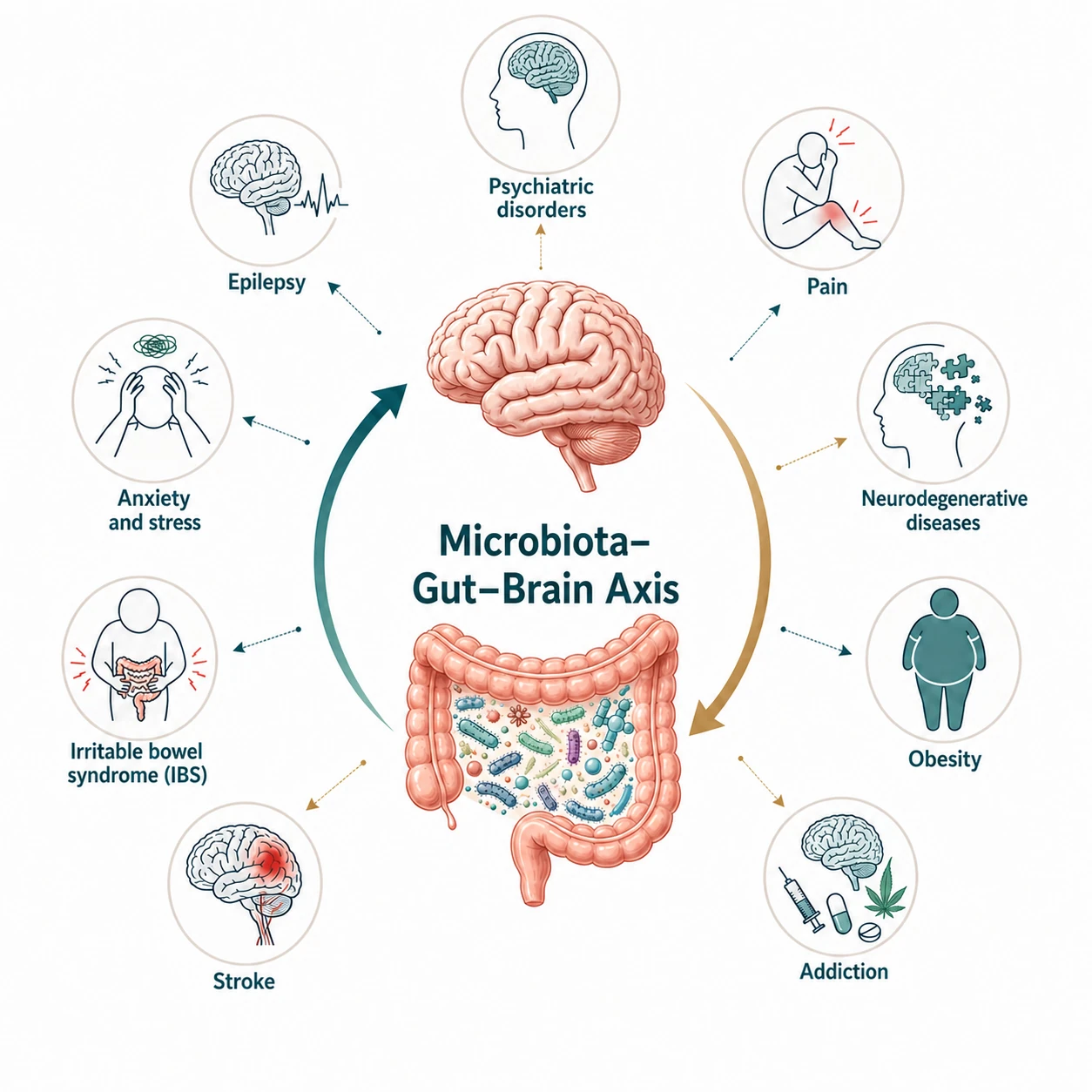
The landmark review by the researchers (2019, Physiological Reviews), produced by 33 researchers from APC Microbiome Ireland over 137 pages, established the conceptual framework used today to describe the microbiota-gut-brain axis: a bidirectional communication system involving the vagus nerve, the immune system, tryptophan metabolism, the enteric nervous system, and microbial metabolites like short-chain fatty acids (SCFAs). The vagus nerve is the main neural pathway of this communication, and approximately 80% of its fibers are afferent, meaning they carry information from the gut to the brain, not the other way around.
A central concept for understanding gut health is microbiota resilience: the ability of the microbial community to recover its composition and function after a disruption (antibiotics, infection, a change in diet). a 2017 review published in Nature Reviews Microbiology argues that a healthy microbiota isn’t defined by diversity alone, but by its ability to return to functional balance; an altered microbiota, the authors note, can also be stable and “trap” the body in a state of dysbiosis associated with inflammatory bowel disease and metabolic disorders.
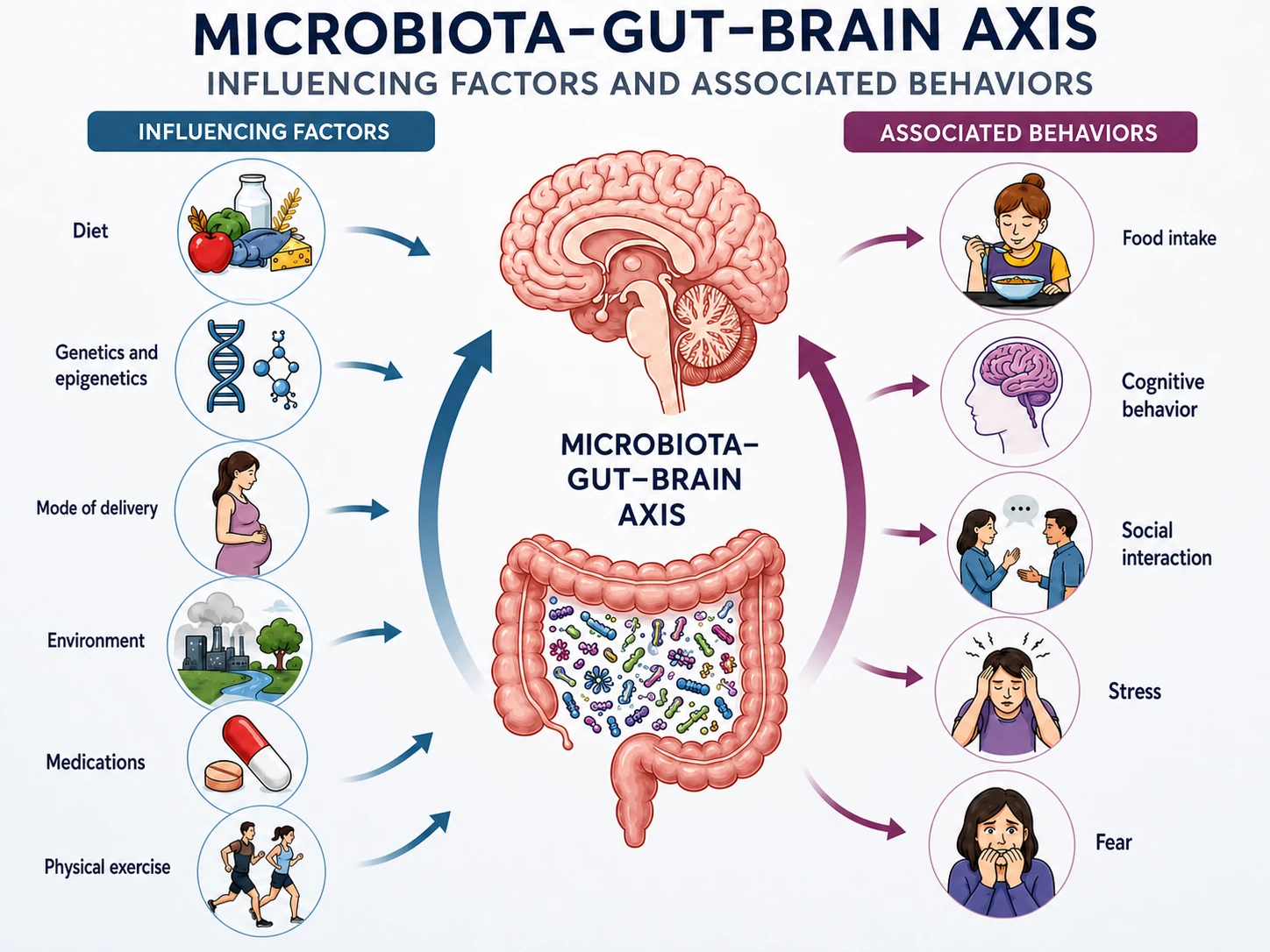
Diet is the main modifiable factor in this composition. The seminal study by the researchers (2011, Science), with nearly 100 volunteers and a controlled-feeding trial, showed that the gut microbiome organizes into enterotypes: one dominated by Bacteroides, associated with Western diets rich in animal protein and saturated fat, and another dominated by Prevotella, associated with diets rich in fiber and plant-based carbohydrates. A practical finding from this study: microbiota composition already changes detectably within 24 hours of starting a new diet, but the dominant enterotype doesn’t shift stably within just 10 days. The takeaway is direct: the gut responds quickly to one-off changes, but transforming the ecosystem in a lasting way requires consistency over weeks and months, not a single meal.
The microorganisms we ingest also matter directly. a 2024 study published in Cell, after sequencing 2,500 food metagenomes from 50 countries in the largest public database of its kind ever created (cFMD), found that food microorganisms represent, on average, 3% of the adult gut microbiota, with evidence of gut colonization by food-derived strains like Lacticaseibacillus paracasei. In other words: what we eat doesn’t just feed the already-resident microbiota, it can, in part, also become part of it.
How the gut communicates with the body: the mechanisms
The “neurobiotic sense”: a neural circuit for bacteria
The most recent and conceptually newest discovery in the scientific library reviewed for this article is that of the researchers (2025, Nature), from Diego Bohórquez’s lab at Duke University. The study identified, in mice, a direct, fast neural circuit through which the colon detects a bacterial molecular pattern and adjusts eating behavior in real time.
The mechanism: flagellin, a structural protein present in the flagella of most bacteria (including commensals and those present in fermented foods), activates the TLR5 receptor in PYY-marked colonic neuropod cells. These cells release the hormone PYY onto vagal neurons that express the NPY2R receptor, a signal that reaches the brain and suppresses food intake. In the experiments, administering flagellin to the mouse colon reduced food intake starting at 20 minutes, an effect that dissipates within about three hours, and mice lacking TLR5 in these specific cells ate more and gained more weight, with no sign of associated inflammation or metabolic dysfunction. Crucially, the effect doesn’t depend on the immune system (the classic TLR5 immune-signaling pathway, the protein MyD88, isn’t required) nor on the presence of a microbiota (the effect held in germ-free mice).
The authors themselves name this pathway the “neurobiotic sense,” a sensory modality through which the body directly monitors its resident microorganisms and adjusts behavior in response to them. It’s important to state, with scientific honesty: the study was conducted in mice, with flagellin purified from Salmonella typhimurium, and there’s still no direct confirmation in humans. Even so, because the TLR5-PYY-vagus system is evolutionarily conserved, the plausibility of a similar mechanism in humans is considered high by the authors themselves.
Barrier immunity and the critical window of childhood
The researchers (2025, Nature Immunology), from researchers at Weill Cornell Medicine, describes the gut as a “bioreactor”: a system where microorganisms, metabolites, immune cells and neurons interact in a precisely regulated way. One of the central findings is the concept of neonatal immune imprinting: the period right after birth represents a critical window in which the microbiota, shaped by delivery mode, breastfeeding and perinatal antibiotics, imprints lasting patterns of immune system maturation that influence disease susceptibility decades later.
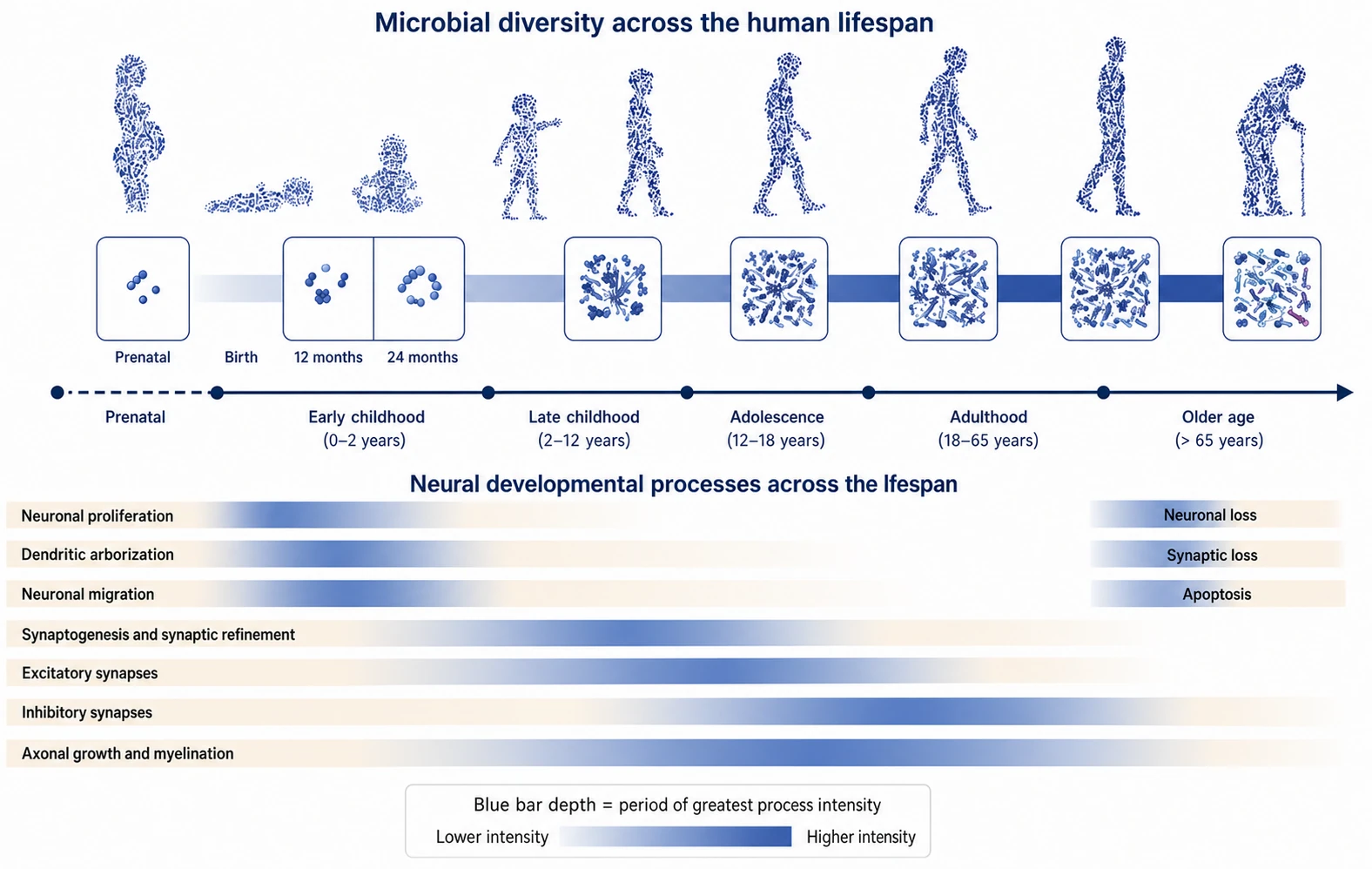
Throughout life, metabolites produced by the microbiota regulate mucosal immunity: short-chain fatty acids (SCFAs, mainly butyrate, propionate and acetate) inhibit enzymes (HDACs) and induce regulatory T cells (Tregs) in the colon; secondary bile acids, produced by the microbiota from liver-derived bile acids, modulate Th17 cells and gut natural killer cells; and tryptophan metabolites activate receptors on immune cells, favoring tolerance.
the researchers (2025, Cellular & Molecular Immunology) update the classic gut-brain axis model to explicitly incorporate the immune system as a central mediator, not a bystander. Disruption of the gut barrier (increased permeability, so-called “leaky gut”) allows bacterial molecules to pass into circulation, which can, in turn, affect blood-brain barrier integrity and contribute to neuroinflammation. The authors review the association between gut dysbiosis and disorders like autism spectrum disorder, Alzheimer’s disease, Parkinson’s disease, depression and anxiety, noting that most of this evidence still comes from animal models, with clinical validation in humans still being built.
Enteroendocrine cells and today’s most prescribed medications
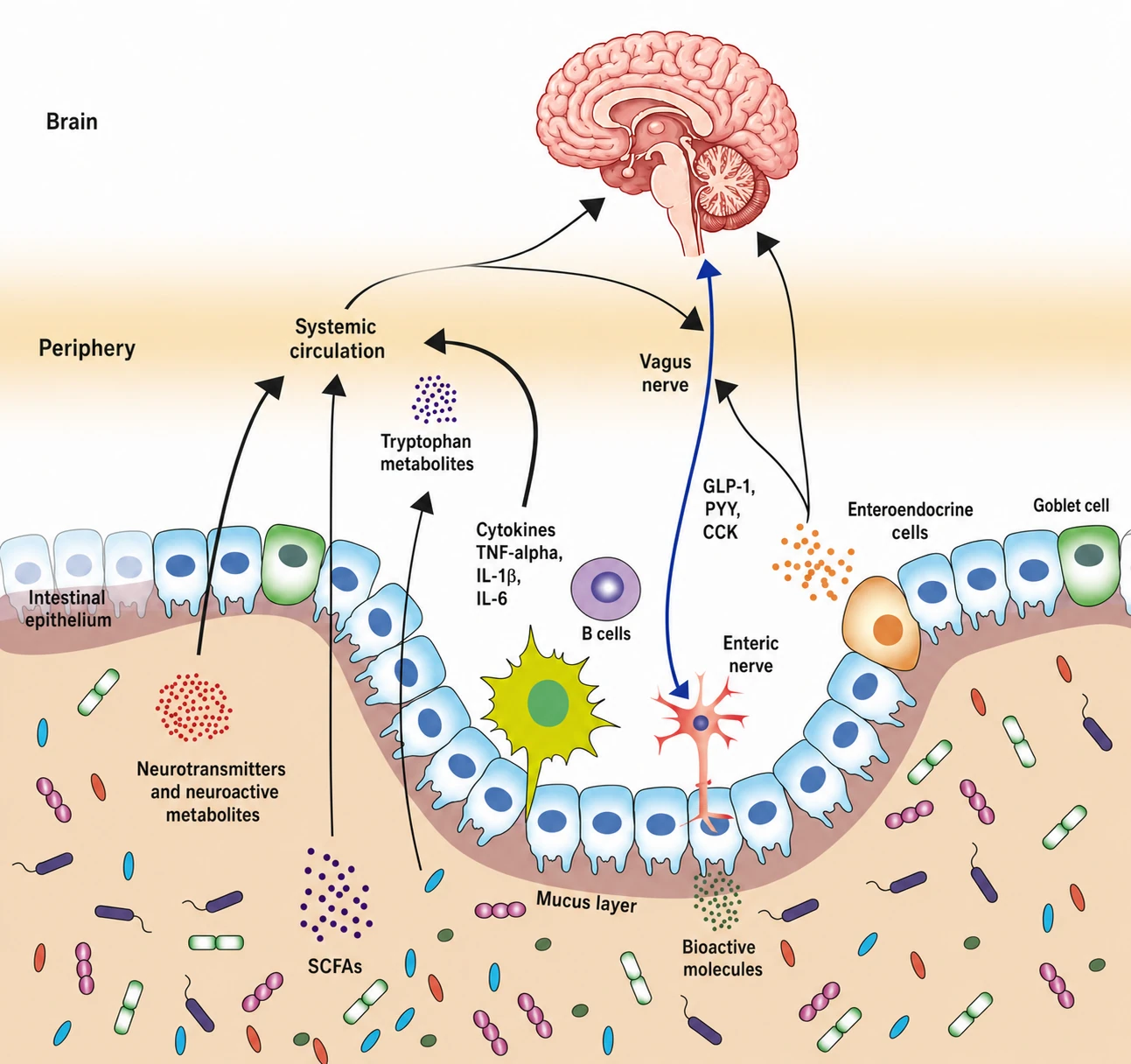
The review by Lorsch and Liddle (2026, Journal of Clinical Investigation), from Duke University, describes enteroendocrine cells (EECs), the largest endocrine system in the human body, as the primary sensors of gut contents. These cells transduce signals through three pathways: paracrine (serotonin), endocrine (GLP-1, GIP, PYY, CCK, ghrelin), and direct synaptic connection with vagal neurons (the “neuropod cells”). The authors highlight that GLP-1 agonists (semaglutide, tirzepatide), today among the most prescribed medications in the world for obesity and type 2 diabetes, have their origin directly in the biology of these gut cells, as do guanylate cyclase C agonists (linaclotide), used to treat constipation-predominant irritable bowel syndrome.
Eating behavior: three phases, one conductor
The review by de the researchers (2026, Nature Reviews Gastroenterology & Hepatology) organizes eating behavior into three phases, each with specific gut-brain signaling: food seeking (dominated by ghrelin and reward circuits), consumption (signaling by CCK, GLP-1 and PYY via the vagus nerve), and the between-meal state (regulated by leptin and insulin). A finding with direct relevance for obesity prevention: chronically high-fat, high-sugar diets remodel vagal fibers, reduce their response to satiety signals, and induce leptin resistance in the hypothalamus, a mechanism the authors describe as the neural basis of hyperphagia (eating beyond what’s needed without noticing).
Microbiota, obesity and type 2 diabetes
The researchers (2026, npj Biofilms and Microbiomes) systematize how dysfunction of the microbiota-gut-brain axis contributes to obesity and type 2 diabetes: high-calorie diets induce dysbiosis, which increases gut permeability and allows translocation of bacterial lipopolysaccharides (LPS) into circulation, a phenomenon called metabolic endotoxemia. LPS activates TLR4 receptors on macrophages and hypothalamic neurons, triggering neuroinflammation that impairs leptin and insulin signaling, favoring hyperphagia and, over time, pancreatic beta-cell dysfunction.
What harms the gut: ultra-processed foods and food additives
The critical review by the researchers (2024, Nature Reviews Gastroenterology & Hepatology), authored by researchers from King’s College London and by Benoit Chassaing (a reference author in the original studies on emulsifiers), brings together epidemiological, preclinical and clinical evidence on how ultra-processed foods and their additives affect the gut.
On the epidemiological front, a meta-analysis of four cohort studies cited by the authors showed increased risk of Crohn’s disease in the highest quartile of ultra-processed food consumption compared to the lowest (HR 1.71; 95% CI 1.37-2.14), with no statistically significant association with ulcerative colitis. Another meta-analysis, with 462,292 participants, linked higher ultra-processed food consumption to a higher risk of colorectal cancer (RR 1.26; 95% CI 1.14-1.38).
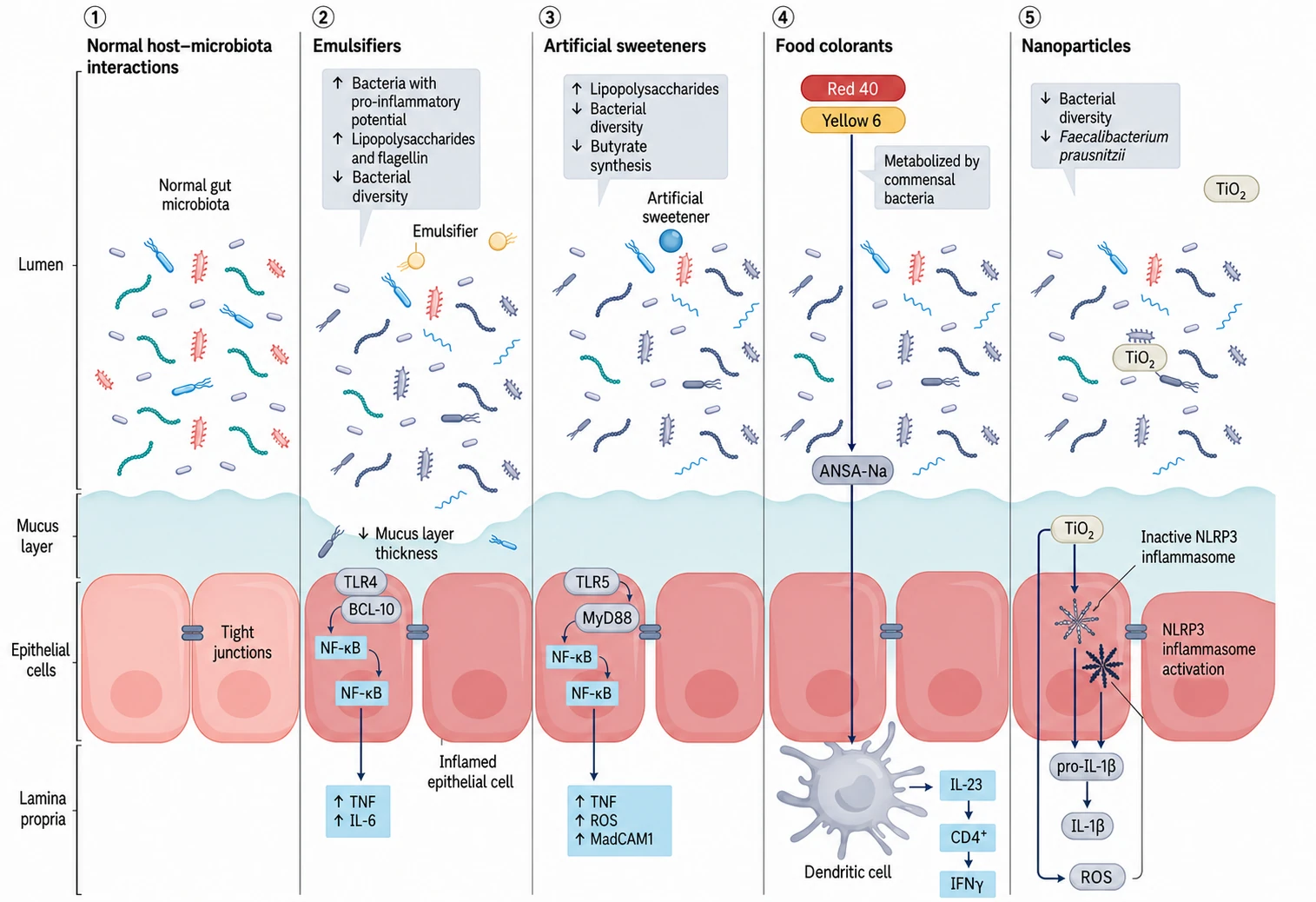
On the mechanistic front, the preclinical evidence is consistent and covers four categories of additives:
Emulsifiers. Carboxymethylcellulose (CMC) and polysorbate 80, common in industrial products, reduce the distance between bacteria and the gut epithelium from about 25 µm to 10 µm in animal models, increase the proportion of bacteria with pro-inflammatory potential and exposure to lipopolysaccharides (LPS) and flagellin, and activate the TLR4-BCL10-NF-κB pathway, raising TNF and IL-6 in the lamina propria. A randomized, double-blind clinical trial confirmed that CMC consumption by healthy humans is already enough to alter microbiota composition and induce post-meal abdominal discomfort.
Artificial sweeteners. Saccharin, sucralose and other sweeteners increased circulating LPS and reduced bacterial diversity and butyrate synthesis in animal models, through a TLR5-MyD88-NF-κB pathway that raises TNF, reactive oxygen species (ROS) and MAdCAM1. Saccharin induced glucose intolerance in mice by altering the microbiota, a finding partially replicated in human volunteers.
Food dyes. The dyes red 40 (E129) and yellow 6 (E110) are metabolized by the commensal microbiota into a common metabolite, sodium 1-amino-2-naphthol-6-sulfonate (ANSA-Na), which activates dendritic cells and triggers an IL-23 → CD4+ T cell → IFN-γ cascade, capable of triggering colitis in a genetically predisposed animal model. The effect depends on the microbiota: it doesn’t occur in germ-free mice.
Nanoparticles. Titanium dioxide (TiO2, additive E171) reduces bacterial diversity and the abundance of Faecalibacterium prausnitzii (one of the main butyrate-producing bacteria), and activates the NLRP3 inflammasome, leading to IL-1β production and reactive oxygen species. Due to genotoxicity concerns, the EFSA concluded, in a decision cited by the authors, that TiO2 should no longer be considered safe as a food additive in the European Union, although it remains in use in other countries, including the United Kingdom.
The authors are explicit about the limits of this evidence: “it’s too early to recommend that patients follow a diet restricting these foods” as an established treatment, even though the biological mechanisms above are already well characterized in preclinical models.
Step-by-step: feed, diversify, preserve
Before the three steps, here are the two definitions behind any practical recommendation, set by international scientific consensus. A probiotic is “live microorganisms that, when administered in adequate amounts, confer a health benefit on the host”. A prebiotic is “a substrate that is selectively utilized by host microorganisms conferring a health benefit”. This distinction matters: not every food with “live cultures” is, in the technical sense, a probiotic, only when there’s evidence of benefit for that specific strain.
The order matters: first feed and preserve the ecosystem that already exists, then consider targeted supplementation.
1. Feed: fiber and prebiotics every day
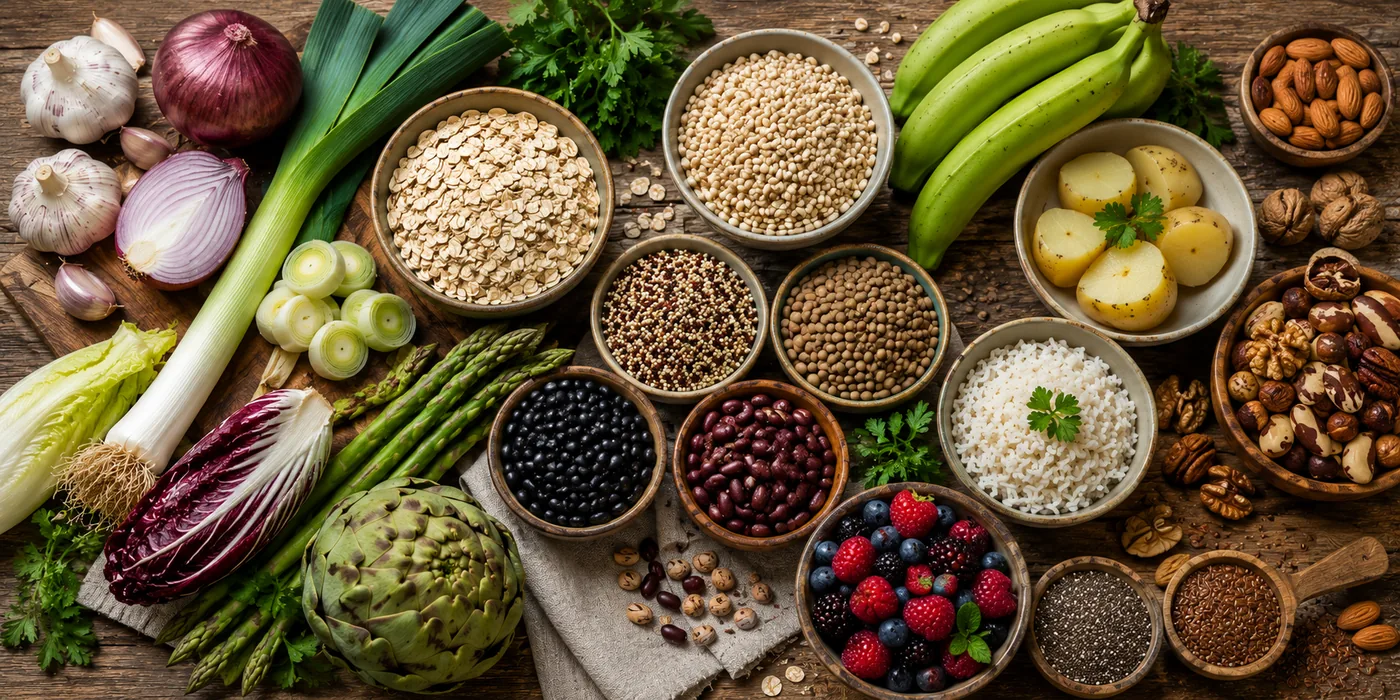
The gut is a living ecosystem: beneficial bacteria grow and function when they find food, not just when they receive a capsule. For the most studied prebiotics (chicory inulin, FOS, GOS), the dose associated with a health benefit in the literature, according to the researchers (2025), generally ranges from 5 to 20 grams a day. The European Food Safety Authority (EFSA) recognizes a specific health claim for chicory inulin regarding the maintenance of bowel function, through the mechanism of stimulating bacterial growth in the gut. Food sources of fermentable fiber include garlic, onion, leek, oats, legumes and fruit.
2. Diversify: vegetables, legumes and fermented foods
The 2025 update from the EAT-Lancet Commission describes, in its reference values for a 2,400 kcal diet, daily amounts of whole grains (210 g), vegetables (300 g), legumes (75 g) and nuts (50 g) as the foundation of a predominantly plant-based, diverse diet.
On including fermented foods specifically, the randomized clinical trial by the researchers (2021, Cell), from Stanford University, compared two microbiota-targeted diets over 17 weeks in 36 healthy adults: one rich in plant fiber and another rich in fermented foods (yogurt, kefir, kimchi, fermented vegetables, kombucha). The result was clear: the diet rich in fermented foods progressively increased gut microbiota diversity and reduced 19 of 93 blood inflammatory proteins, including IL-6, IL-10 and IL-12b, consistently across participants. The high-fiber diet, meanwhile, increased the activity of microbial enzymes that digest carbohydrates, but did not increase microbiota diversity in the cohort as a whole; its immune effects depended on the microbial diversity each person already had at the start of the study. The practical takeaway: fermented foods and fiber have distinct, complementary effects, not competing ones.
A relevant difference between types of fermented food: the review by the researchers (2026, Nature Reviews Microbiology) shows that plant-based, fiber-rich ferments (kimchi, sauerkraut, miso, tempeh) preserve microbial viability during gastrointestinal transit more consistently than fermented dairy, because the fiber protects the microorganisms along the path to the colon.
3. Preserve: reduce ultra-processed foods and use antibiotics only when needed
Based on the mechanism described by the researchers (2024): prioritizing minimally processed foods reduces exposure to emulsifiers, artificial sweeteners, dyes and micro/nanoparticles with a demonstrated effect on gut mucus thickness, epithelial tight junctions, and microbiota-mediated inflammatory pathways. The authors themselves reinforce that this is, today, a recommendation supported by a robust biological mechanism, even though clinical evidence that restricting these additives treats gut disease in humans is still being built. The same EAT-Lancet report distinguishes minimal processing (like fermenting milk into yogurt) from ultra-processing, citing fermentation as a traditional technology that preserves and even improves nutrient bioavailability.
Who benefits
- People in general looking to improve microbiota diversity and reduce low-grade inflammation markers, through regular consumption of fermented foods.
- People with diets historically low in fiber and high in ultra-processed foods, a context in which fermented foods can counter the low diversity typical of Western diets.
- Pregnant people and families with newborns, given the role of delivery mode, breastfeeding and perinatal antibiotics in the long-term immune imprinting mediated by the microbiota.
- People with obesity or cardiometabolic risk, a context in which modulating the microbiota-gut-brain axis (SCFAs, bile acids, vagal signaling) is an active therapeutic research target.
- People using GLP-1 agonists or with an indication for GCC agonists, who benefit from understanding that these drugs act on the same gut biology described here (Lorsch & Liddle, 2026).
Who should be cautious or seek professional evaluation
- Symptoms suggestive of irritable bowel syndrome (recurring abdominal pain, bloating, changes in bowel habits): more than a third of IBS patients (38%, 95% CI 32-44%) have small intestinal bacterial overgrowth (SIBO), with almost five times the risk compared to healthy controls (OR 4.7; 95% CI 3.1-7.2). In this context, abruptly increasing fermentable fiber or fermented foods on your own can worsen symptoms before improving them; gastroenterology evaluation is recommended.
- Celiac disease with persistent symptoms despite a gluten-free diet (refractory celiac disease): SIBO is significantly more frequent in these cases (36.8% to 78.9%, depending on the diagnostic criterion, versus 16% to 47.3% in disease responsive to a gluten-free diet). Investigating SIBO is recommended before making additional dietary interventions on your own.
- Populations with evidence of dysbiosis associated with already-established inflammatory bowel disease or metabolic disorders: dietary changes should be made with clinical follow-up, since a dysbiotic microbiota can be just as resilient (stable) as a healthy one, and doesn’t reverse with one-off adjustments alone.
Conclusion
The gut isn’t an isolated digestive organ: it’s a regulating system that communicates with the brain, the immune system and metabolism through specific neural, hormonal and microbial pathways, described in ever more detail by science. From the discovery of the neurobiotic sense to the role of the mucosal barrier, and the measurable effect of fermented foods on inflammation, the central message converges: what a person eats, every day, literally shapes who lives in their gut and how that ecosystem talks with the rest of the body.
Caring for the gut doesn’t depend on a single solution. Diversifying plant-based eating, including fermented foods regularly, respecting prebiotic fiber doses with evidence of benefit, and reducing exposure to ultra-processed foods and additives are complementary strategies, supported by biological mechanisms that are now well characterized. For anyone with persistent digestive symptoms, individualized professional evaluation remains the most important step before any more aggressive dietary change.
References
Scientific studies
Liu WW, Reicher N, Alway E, et al., 2025.A gut sense for a microbial pattern regulates feeding. Nature. 2025;645:729-735. · Acessar fonte
Key findings
An experimental study in mice (Duke University) identifying a direct neural circuit, the "neurobiotic sense," through which bacterial flagellin in the colon activates the TLR5 receptor in PYY neuropod cells, which signal via the vagus nerve (NPY2R receptor) to suppress food intake within about 20 minutes. The effect is independent of the immune system and of the presence of a microbiota. Mice lacking TLR5 in these specific cells ate more and gained more weight, with no associated metabolic dysfunction. A preclinical study; direct translation to humans hasn't been confirmed yet, but is considered plausible by the authors given the evolutionary conservation of the circuit.
Ma K, Zhang Q, Hao R, Sun X, Jia J, Li M, 2026.The microbiota-gut-brain axis: novel mechanisms and therapeutic frontiers in obesity and type 2 diabetes. npj Biofilms and Microbiomes. 2026. · Acessar fonte
Key findings
A review that systematizes how dysfunction of the microbiota-gut-brain axis contributes to obesity and type 2 diabetes, via dysbiosis, metabolic endotoxemia (LPS translocation), hypothalamic neuroinflammation, and impairment of the incretin axis (GLP-1/GIP). It discusses SCFAs, secondary bile acids, and microbial extracellular vesicles as messengers of the axis.
de Lartigue G, Brierley DI, Choi HJ, 2026.The critical role of gut-brain signalling in eating behaviour and obesity. Nature Reviews Gastroenterology & Hepatology. 2026. · Acessar fonte
Key findings
A review that organizes eating behavior into three phases (seeking, consumption, and the non-prandial state) regulated by specific gut-brain signaling, with the vagus nerve as the main conduit. It shows that chronically high-fat, high-sugar diets remodel vagal fibers and induce hypothalamic leptin resistance, a central mechanism of hyperphagia. It proposes the vagus nerve as an underappreciated therapeutic target for obesity.
Lorsch ZS, Liddle RA, 2026.Mechanisms and clinical implications of gut-brain interactions. Journal of Clinical Investigation. 2026;136(1):e196346. · Acessar fonte
Key findings
A review of enteroendocrine cells (EECs) as central sensors of the gut-brain axis, with paracrine, endocrine and synaptic signaling. It connects the biology of these cells to EEC-targeted therapies already in clinical use: GLP-1 agonists (semaglutide, tirzepatide) for obesity/diabetes and GCC agonists (linaclotide) for irritable bowel syndrome.
Iliev ID, Blander JM, Collins N, et al., 2025.Microbiota-mediated mechanisms of mucosal immunity across the lifespan. Nature Immunology. 2025;26:1645-1659. · Acessar fonte
Key findings
A review of how the microbiota regulates mucosal immunity from infancy to old age, highlighting neonatal immune imprinting (shaped by delivery mode, breastfeeding and antibiotics) and the role of microbial metabolites (SCFAs, secondary bile acids, tryptophan) in modulating regulatory T cells and epithelial integrity.
Park JC, Chang L, Kwon HK, Im SH, 2025.Beyond the gut: decoding the gut-immune-brain axis in health and disease. Cellular & Molecular Immunology. 2025;22:1287-1312. · Acessar fonte
Key findings
A review that expands the classic gut-brain axis to incorporate the immune system as a central mediator, discussing how dysbiosis and increased gut permeability ("leaky gut") can compromise the blood-brain barrier and contribute to neuroinflammation in disorders like autism, Alzheimer's, Parkinson's, depression and anxiety. Most of the mechanistic evidence still comes from animal models.
Cryan JF, O'Riordan KJ, Cowan CSM, et al., 2019.The Microbiota-Gut-Brain Axis. Physiological Reviews. 2019;99(4):1877-2013. · Acessar fonte
Key findings
A foundational review (137 pages, 33 authors) that established the framework of the microbiota-gut-brain axis: communication pathways (the vagus nerve, the immune system, tryptophan metabolism, SCFAs, the enteric nervous system), factors that shape the microbiota across the lifespan, and the association of dysbiosis with neuropsychiatric and neurodegenerative disorders. About 80% of vagus nerve fibers are afferent (gut to brain).
Carlino N, Blanco-Míguez A, Puncochar M, et al., 2024.Unexplored microbial diversity from 2,500 food metagenomes and links with the human microbiome. Cell. 2024;187(21):5775-5795. · Acessar fonte
Key findings
A metagenomic study that sequenced 2,500 food samples from 50 countries, creating the largest public database of food microbiomes (cFMD), identifying 320 never-before-described taxa. Comparison with more than 20,000 human metagenomes showed that food microorganisms represent, on average, 3% of the adult gut microbiota, with evidence of colonization by strains like Lacticaseibacillus paracasei.
Kim D, Joe HI, Bae JW, Wu GD, Compher CW, Koo H, 2026.Fermented food microbiome: influence on oral and gut microbiota, and human health. Nature Reviews Microbiology. 2026. · Acessar fonte
Key findings
A review (stated impact factor ~104) of the fermented-food microbiome (FFM) and its effects on oral and gut microbiota. It shows that plant-based, fiber-rich ferments (kimchi, sauerkraut, miso) preserve microbial viability during gastrointestinal transit more consistently than fermented dairy. It introduces the concept of the oral-gut axis.
Whelan K, Bancil AS, Lindsay JO, Chassaing B, 2024.Ultra-processed foods and food additives in gut health and disease. Nature Reviews Gastroenterology & Hepatology. 2024;21(6):406-427. · Acessar fonte
Key findings
A critical review of how ultra-processed foods and additives (emulsifiers, artificial sweeteners, dyes, micro/nanoparticles) affect the gut. A meta-analysis of cohorts showed higher risk of Crohn's disease (HR 1.71) associated with higher ultra-processed food intake, with no significant association with ulcerative colitis; another meta-analysis linked ultra-processed foods to higher colorectal cancer risk (RR 1.26). Emulsifiers like CMC and polysorbate 80 reduce mucus layer thickness and impair tight junctions in animal and human models. The authors state that "it's too early" to recommend restrictive diets as an established clinical treatment.
Hutkins R, Walter J, Gibson GR, et al., 2025.Classifying compounds as prebiotics — scientific perspectives and recommendations. Nature Reviews Gastroenterology & Hepatology. 2025;22:54-70. · Acessar fonte
Key findings
An expert recommendation document (ISAPP) that confirms the definition of a prebiotic as "a substrate that is selectively utilized by host microorganisms conferring a health benefit," and sets minimum classification criteria. The dose associated with a health benefit for chicory inulin or GOS generally ranges from 5 to 20 g/day. The EFSA recognizes a specific health claim for chicory inulin regarding the maintenance of bowel function.
Wastyk HC, Fragiadakis GK, Perelman D, et al., 2021.Gut microbiota-targeted diets modulate human immune status. Cell. 2021;184(16):4137-4153. · Acessar fonte
Key findings
A Stanford randomized clinical trial (17 weeks, n=36) comparing a diet rich in plant fiber versus a diet rich in fermented foods. The fermented-food diet progressively increased microbiota diversity and consistently reduced 19 of 93 serum inflammatory proteins (including IL-6, IL-10, IL-12b). The high-fiber diet increased microbial enzymes (CAZymes) but did not increase microbiota diversity in the overall cohort; its immune effects depended on each participant's baseline microbial diversity.
Wu GD, Chen J, Hoffmann C, et al., 2011.Linking long-term dietary patterns with gut microbial enterotypes. Science. 2011;334(6052):105-108. · Acessar fonte
Key findings
A seminal study (University of Pennsylvania) that showed that the gut microbiome organizes into enterotypes (Bacteroides vs. Prevotella) associated with long-term habitual diet, not recent diet. In a controlled-feeding trial, microbial composition changed detectably within 24 hours, but the dominant enterotype did not change stably within 10 days, even with a high-fiber diet.
Sommer F, Anderson JM, Bharti R, Raes J, Rosenstiel P, 2017.The resilience of the intestinal microbiota influences health and disease. Nature Reviews Microbiology. 2017;15(10):630-638. · Acessar fonte
Key findings
A perspective article proposing resilience (the ability to recover after a disruption) as the central concept for understanding gut health and dysbiosis. It argues that a dysbiotic microbiota can also be stable and resilient, perpetuating a disease state, which makes "more diversity is always better" an oversimplification to avoid.
Chen B, Kim JJ, Zhang Y, Du L, Dai N, 2018.Prevalence and predictors of small intestinal bacterial overgrowth in irritable bowel syndrome: a systematic review and meta-analysis. Journal of Gastroenterology. 2018;53(7):807-818. · Acessar fonte
Key findings
A systematic review and meta-analysis of 50 studies (8,398 IBS patients, 1,432 controls) that found a pooled SIBO prevalence of 38% (95% CI 32-44%) in patients with irritable bowel syndrome, with almost five times the risk compared to healthy controls (OR 4.7; 95% CI 3.1-7.2). Female sex, older age, and diarrhea-predominant IBS were predictors of SIBO.
Damianos JA, King KS, Lee A, Murray JA, Bledsoe AC, 2026.Small intestinal bacterial overgrowth is common in celiac disease but is not associated with Marsh score. npj Gut and Liver. 2026;3:16. · Acessar fonte
Key findings
A retrospective study (Mayo Clinic) in 256 patients with confirmed celiac disease: SIBO was present in 17.6% to 49.6% (depending on the diagnostic threshold), with no association with histological severity (Marsh score), but was significantly more frequent in refractory celiac disease (36.8%-78.9% vs. 16%-47.3% in disease responsive to a gluten-free diet).
Hill C, Guarner F, Reid G, et al., 2014.The International Scientific Association for Probiotics and Prebiotics consensus statement on the scope and appropriate use of the term probiotic. Nature Reviews Gastroenterology & Hepatology. 2014;11(8):506-514. · Acessar fonte
Key findings
An ISAPP consensus document that defines a probiotic as "live microorganisms that, when administered in adequate amounts, confer a health benefit on the host." It establishes that foods with live cultures without evidence of a specific benefit should not be called probiotics, and proposes levels of scientific evidence for different types of health claims.
Rockström J, Thilsted SH, Willett WC, et al. (EAT-Lancet Commission), 2025.The EAT-Lancet Commission on healthy, sustainable, and just food systems. The Lancet. 2025;406:1625-1700. · Acessar fonte
Key findings
An update from the EAT-Lancet Commission on the Planetary Health Diet, with daily reference values (whole grains 210 g, vegetables 300 g, legumes 75 g, nuts 50 g) for a predominantly plant-based diet. It distinguishes minimal processing (including fermentation) from ultra-processing, and links greater adherence to the pattern with 28% lower overall mortality in a cohort of more than 200,000 adults followed for up to 33 years.
Informational content. Health recommendations and protocols require individual assessment by qualified professionals.