Regenera Method

The Regenera Method is a personalized journey of integrated health.

It integrates history, habits, exams and goals to build a clear, personalized and sustainable direction of care.

  • Identify early signs of physical, metabolic and biochemical imbalance.
  • Organize habits, exams, risks and care priorities.
  • Take part in health decisions with more clarity, awareness and strategy, together with the care team.

Starting point

Mindset and lifestyle as a clinical foundation.

The method begins with pillars that sustain energy, metabolic balance and functionality throughout life.

  • The goal of the method is to promote your leadership in your own health, so you can live longer, with more autonomy, clarity, strength, energy, lucidity and quality.

Practices - Daily movement

A body that moves regulates better.

  • Each type of movement serves a specific metabolic function.
  • Resistance training strengthens muscle, an organ essential for metabolism and insulin sensitivity.
  • Walking after meals blunts the glycemic spike.
  • Climbing stairs quickly activates the metabolic response.
Person climbing stairs

Daily - whenever possible

Take the stairs instead of the elevator

  • A short gesture with high metabolic density.
  • Activates large muscle groups and improves cardiorespiratory capacity.
  • Every flight counts.
Walking and contact with nature

Daily

Walk outdoors for 30 minutes

  • Movement + natural light + fresh air regulate circadian rhythm, lower cortisol and activate metabolism.
  • Works even better after main meals.
Resistance training

Weekly - 2-3x

Resistance training 2-3x per week

  • A central tool for functional longevity.
  • Progressive load preserves muscle mass, insulin sensitivity and bone density.
Yoga and stretching

Daily - 5-10 min

Stretch and mobilize every day

  • 5 to 10 min of chest mobility, hip and fascia stretching to release tension and improve posture.
  • Yoga also combines movement, breathing and attention.

Dietary pattern

What protects and what harms the metabolism.

Clinical trials show consistent improvement in cardiometabolic markers - cholesterol, blood sugar, weight and blood pressure - when the diet prioritizes minimally processed foods and Mediterranean patterns.

Protective pattern

A Mediterranean base, minimally processed, with plant diversity and quality protein.

View details Hide details
  • Fresh vegetables, legumes and fruit in variety, prioritizing color and seasonality.
  • Lean protein in main meals - eggs, fish, legumes, lean meats.
  • Extra-virgin olive oil as the main fat.
  • Whole grains, nuts and seeds in regular portions.
  • Simple, home-cooked preparations, with natural seasoning.

Harmful pattern

Ultra-processed foods, free sugar, excess sodium and unstable fats that sustain chronic inflammation.

View details Hide details
  • Free sugar and sweeteners in drinks and ready-made products.
  • Excess sodium (WHO recommends under 5g of salt per day).
  • Refined vegetable oils used at high heat.
  • Cookies, ready-made cakes and ultra-processed snacks.
  • Soda, boxed juices and sweetened drinks.
  • Ready-made sauces, industrial stocks and preserves with additives.
  • Industrial cream and condensed milk.

Practices - Mindful eating

Real food - good fat, fiber, simple meals.

Home-cooked meals, with plant diversity and quality protein. Small choices that sustain metabolism, satiety and nutrient density throughout the day.
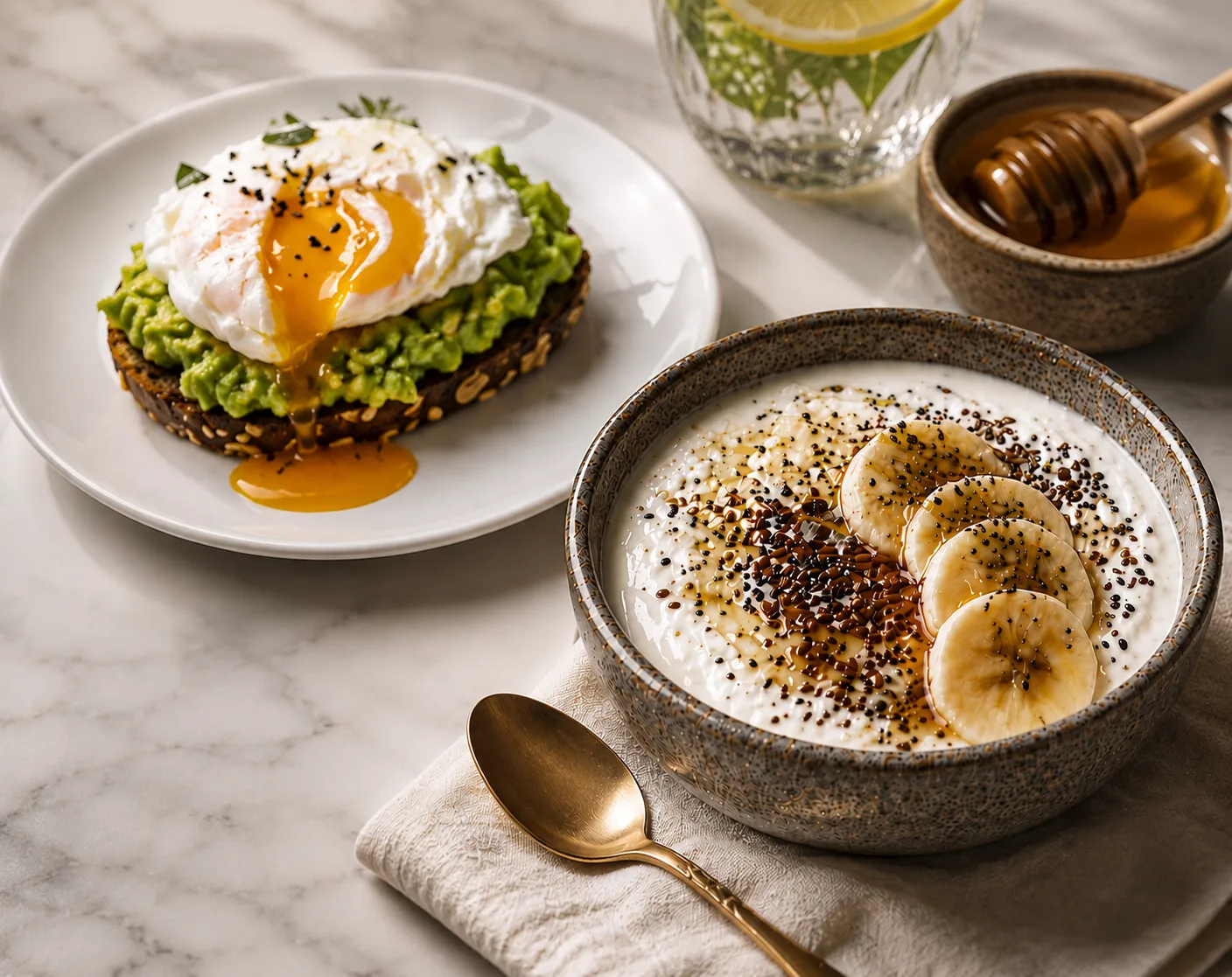
Breakfast with whole-grain toast, avocado, egg and plain yogurt with banana, chia and granola

Daily - breakfast

Protein breakfast: toast with avocado, egg and yogurt

  • Combines good fat from avocado, complete protein from egg and plain yogurt, fiber from whole-grain bread, chia and flaxseed.
  • Helps sustain satiety, steadier blood sugar and energy through the morning.
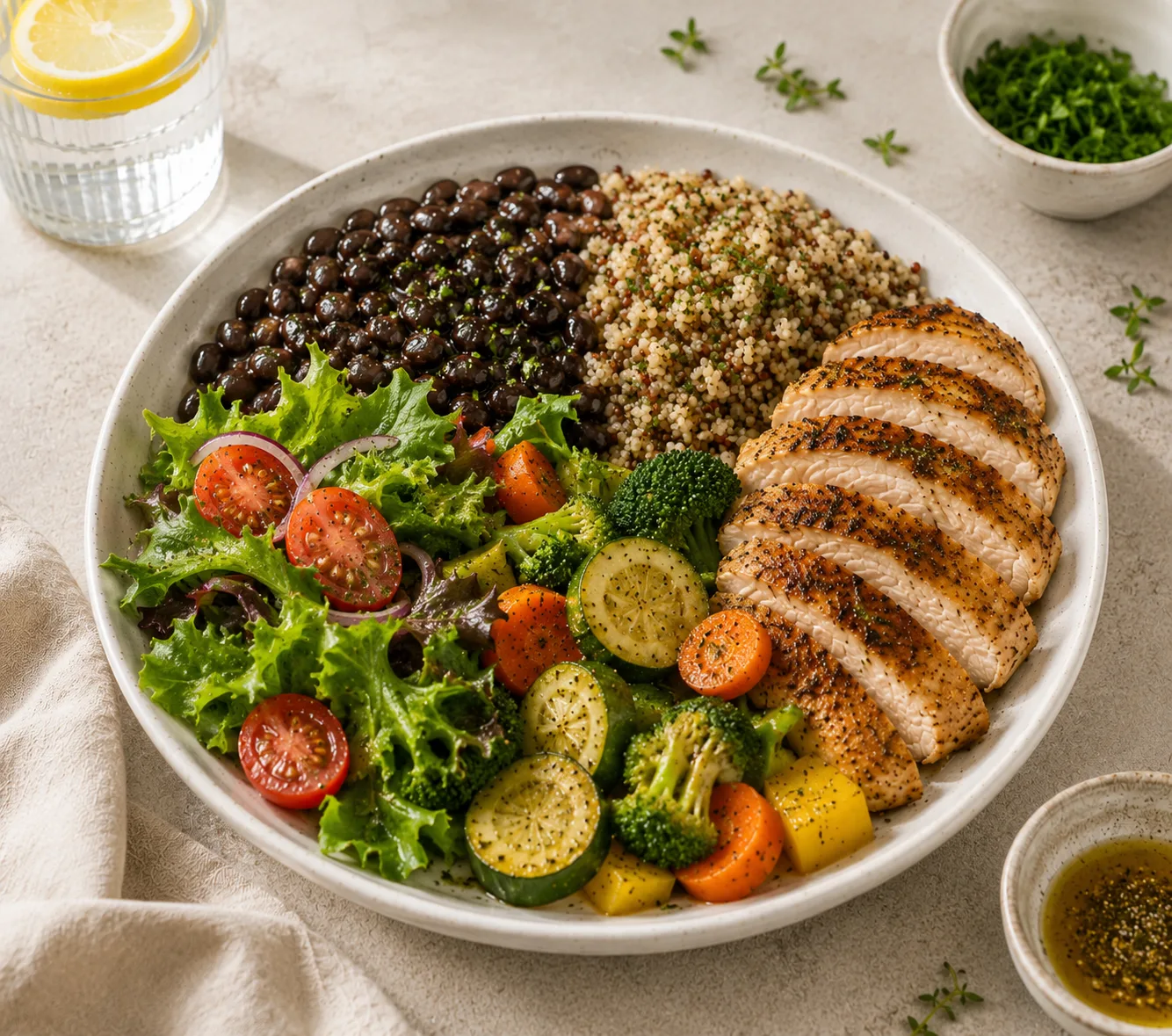
Colorful lunch plate with chicken, beans, quinoa and vegetables

Daily - lunch

Colorful lunch with protein, grains and vegetables

  • A plate with quality protein, beans, quinoa or brown rice and a variety of vegetables.
  • Delivers fiber, minerals, higher-quality carbohydrates and protective plant compounds.
  • Simple preparations, with natural ingredients, fresh seasoning and extra-virgin olive oil.
Fresh vegetables and legumes in a bowl

Daily - every meal

Vegetables and legumes - the base of everything

  • Minimally processed foods, rich in fiber, polyphenols, vitamins and minerals.
  • Sustain satiety, modulate the microbiota, reduce inflammation and stabilize blood sugar.
  • Varying colors and textures is the simplest path to high nutrient density.
Homemade soup in a bowl with vegetables and herbs

Weekly - 2-3x

Homemade soups

  • High nutrient density, low digestive volume, easy to chew.
  • Excellent in the late afternoon, when the body is already asking to slow down.
  • Add protein to taste, which can be blended into the preparation.
Homemade bone broth

Batch-cook and freeze

Bone broth instead of store-bought stock

  • Delivers collagen, glycine, proline and minerals - good for joints, gut and skin.
  • Becomes the base for soups, risottos and stews.
  • Replaces ready-made seasonings and industrial stocks loaded with sodium, preservatives and inflammatory fats.
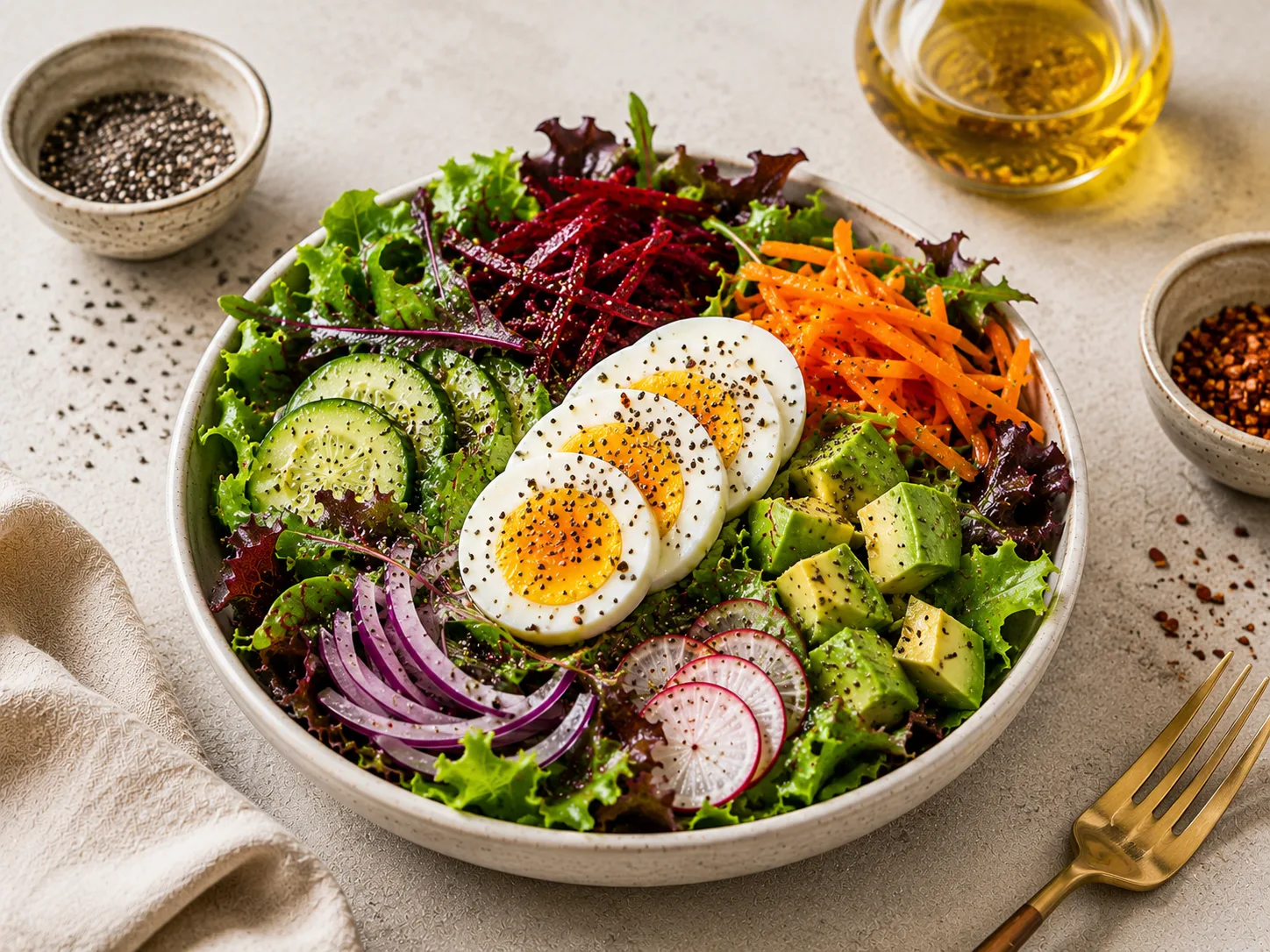
Bowl of colorful salad with greens, egg, avocado, seeds and extra-virgin olive oil

Daily - lunch/dinner

Colorful salad with extra-virgin olive oil

  • The more colors, the more varied the polyphenols and fibers.
  • Microbial diversity grows with plant variety.
  • Extra-virgin olive oil as the main fat supports absorption of fat-soluble nutrients.

Protein · WHO 2026

Optimized range for adults.

1.2 - 1.6 g / kg of body weight / day

WHO 2026 · USDA

View details Hide details

WHO's updated recommendation for healthy adults places the optimized protein intake at 1.2 to 1.6 g per kilogram of body weight per day - above the historic minimum of 0.8 g/kg, which prevents deficiency but does not sustain ideal metabolic function throughout life.

  • Sustained satiety throughout the day
  • Metabolic control and insulin sensitivity
  • Maintenance of muscle mass
  • Healthy aging - preventing sarcopenia

Microbiome

It's not just what you eat - it's how you modulate it.

~ 0%

of immune cells are present in the gut.

+ 0%

of the world's population has some functional gastrointestinal disorder.

~ 0%

of the population has symptoms like abdominal distension and bloating.

See how to modulate it Hide how to modulate it

How to modulate it in practice

  • Plant diversity - 25 to 30 different types of plants per week.
  • Soluble and insoluble fiber in every main meal: oats, chia, flaxseed, beans, lentils, chickpeas, fruit with skin, greens and vegetables.
  • Regular fermented foods (plain yogurt, kefir, sauerkraut, kimchi).
  • Less ultra-processed food, which impoverishes microbial diversity.
  • Clinical probiotics when there is documented dysbiosis or after antibiotics.

Practices - Environment, regulation and connections

Breathing, sound, mantras and bonds regulate as much as food.

Conscious breathing, music, voice and quality relationships are legitimate modulators of autonomic tone.

Diaphragmatic breathing and meditation

Daily - 10-15 min

Diaphragmatic breathing and meditation

  • Breathe in deeply, expanding first the belly, then the chest; hold for 5 seconds; exhale slowly through the mouth (chest first, then belly) until all the air is out.
  • Activates the parasympathetic system within minutes: lowers cortisol, heart rate and tension.

Read the full article →

Classical and instrumental music - piano and violin

Daily - morning

Classical or instrumental music on waking

  • Replaces news and social feeds.
  • Slow rhythms reduce sympathetic activation and anchor the tone of waking up.
Mantras and chanting for focus

Free - moments of tension

Mantras and chanting for focus

  • Slow vocalization engages the vagus nerve, with an effect comparable to diaphragmatic breathing.
Gathering with family or friends at a shared table

Weekly

Happy gatherings - start with yourself

  • Real bonds regulate stress, reduce inflammation and protect the heart and mind.
  • Screen-free meals, unhurried conversations, real presence.
Daily self-care for skin and presence

Daily - morning/night

Self-care as a pause for presence

  • Caring for the skin (sunscreen, antioxidants, moisturizer) protects the skin barrier, an active immune organ.
  • The predictability of the ritual organizes cortisol and anchors the rhythm of the day.
Sleep hygiene - cozy environment with low light

Daily - from dinner to waking

Sleep hygiene

  • Dinner up to 3 hours before bed.
  • A night ritual with low light, a book and no screens.
  • Wake up to natural light to sync the circadian rhythm.
  • Quality sleep regulates blood sugar, hormones, appetite, memory and immunity.

Daily routine

A practical daily model.

The method translates science into a chronological set of gestures. Each block of the day has a specific metabolic function: open the system, keep it regulated, prepare for rest.

01

On waking

  • Water in small sips
  • 10 min of diaphragmatic breathing
  • A simple, light breakfast or, if possible, a fast
02

Through the day

  • Eat 80% of what you'd like
  • Avoid snacking on trigger foods
  • A light walk after meals
  • After clinical improvement, more intense exercise
03

Late afternoon

  • Light stretching and meditation
  • Lowering the pace and stimulation
04

Night

  • An early dinner, up to 3 hours before bed
  • Sleep with the head of the bed slightly raised

Medications

Necessary prescriptions, periodic review and possible autonomy.

Patient-centered care models periodically review each intervention and strengthen sustainable everyday health strategies.

  • Recognize the role of medications when they are necessary, always within a supervised clinical plan.
  • Periodically review the necessity, dose, indication and continuity of each intervention.
  • Create safe paths to reduce prescriptions when that is possible, sustainable and clinically appropriate.
  • Qualify decisions, avoid excess and preserve autonomy throughout aging.
  • Strengthen as a structured part of care nutrition movement sleep stress management social bonds mobility risk monitoring health education

Next step

From the scientific foundation to your case.

If you want to apply this method to your own health, or bring it to your institution's clinical team, we can talk about how to adapt each layer to your context.

InovaSaude's consultations and content are technical, educational, advisory and complementary in integrated health, prevention and longevity, based on scientific evidence; they do not replace medical evaluation, diagnosis, prescription or treatment, and should not be used to change clinical care without guidance from the responsible professional.